
Using the right hydrostatic transmission fluid keeps internal components cool, prevents wear, and ensures the mower responds accurately to your steering inputs.
This guide covers everything you need to know: how hydrostatic fluid works, when to change it, how to choose the right type, and the best fluids available today.
Zero Turn Hydrostatic Transmission Fluid
1. John Deere Hy-Gard Hydraulic & Transmission Oil
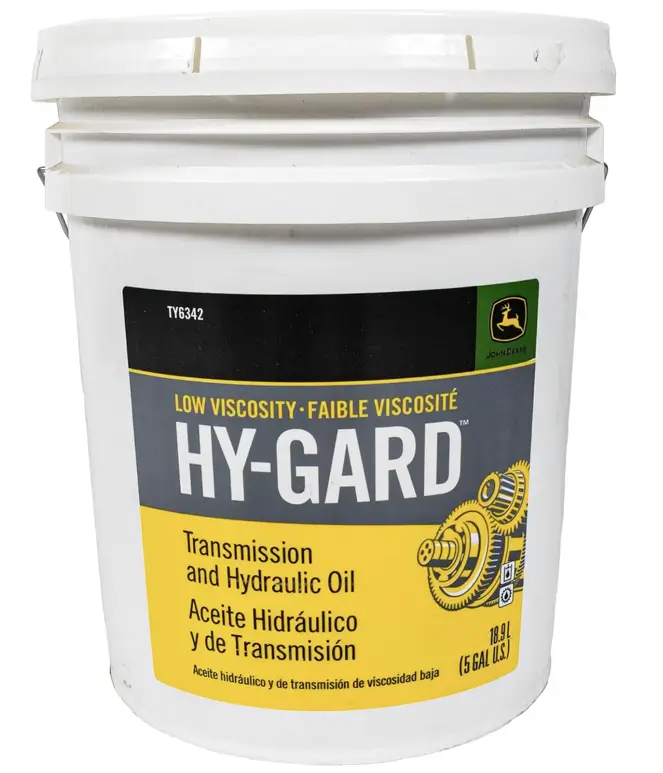
Ideal if your mower manual specifies Hy-Gard or compatible hydraulic fluid. Excellent all-around performance for most residential and commercial applications.
Features:
- OEM-engineered fluid for hydrostatic drives and wet-brake systems
- Protects against wear, rust, and oxidation
- Works well across wide temperature ranges
- Designed for smooth steering and consistent pump pressure
- Available in large or small containers for any mower size
2. Lucas Oil Synthetic Blend SAE 20W-50 Hydrostatic Transmission Fluid
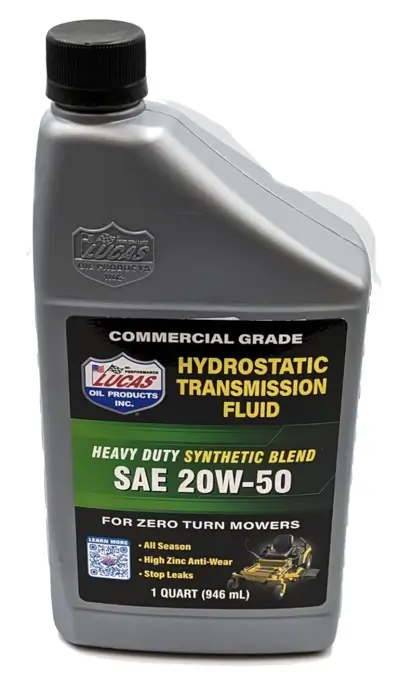
A popular aftermarket option that fits many mower brands requiring 20W-50.
Features:
- Synthetic-blend formula for better heat resistance
- Stable viscosity under heavy mowing or steep hills
- Strong anti-wear and anti-corrosion additives
- Reduces foaming and oxidation
- Affordable and widely used in residential and light commercial fleets
3. TRIAX Trans Zero 20W-50 Full Synthetic Hydrostatic Oil
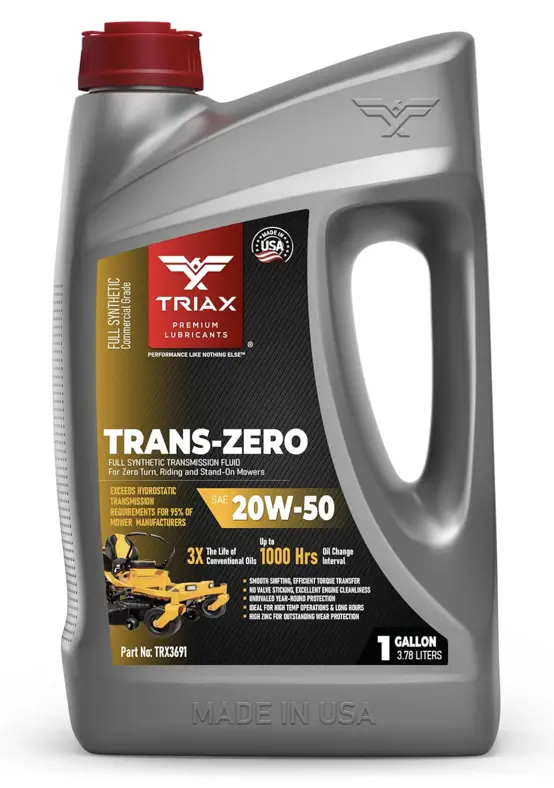
Perfect for commercial use or long hot-weather mowing sessions.
Features:
- Full synthetic formulation optimized for zero-turn hydrostatic drives
- High thermal stability and resistance to breakdown
- Maintains consistent pressure for precise steering
- Excellent oxidation control and long service life
- Great choice for heavy-duty operators or pros working long hours
4. Mobil 1™ Synthetic ATF (Multi-Vehicle)
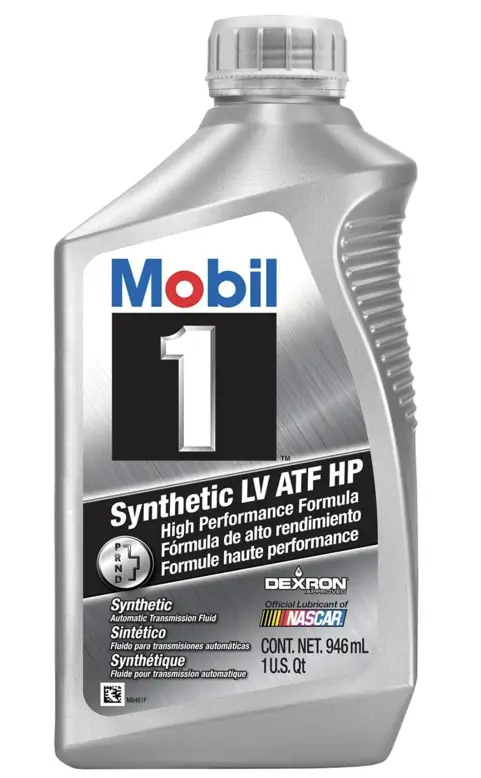
Used in some zero-turn mowers that specify ATF-compatible hydrostatic systems.
Features:
- Full synthetic base oils for superior wear protection
- Excellent low- and high-temperature performance
- Resists oxidation and fluid degradation
- Helps maintain smooth pump and motor operation
- Trusted brand with consistent quality
5. Stens Shield 770-738 SAE 20W-50 Hydrostatic Transmission Fluid
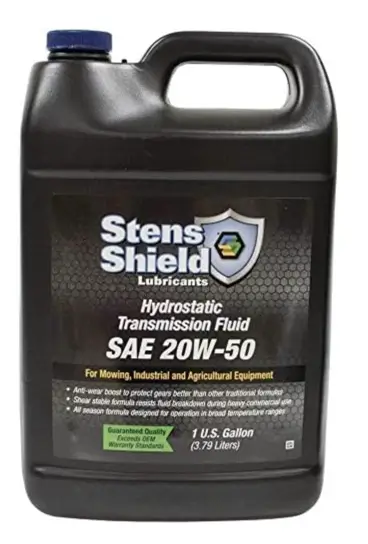
A reliable aftermarket hydrostatic oil option for zero-turn mowers and other equipment specifying 20W-50.
Features:
- SAE 20W-50 viscosity suitable for a wide range of temperatures
- Designed for use in hydrostatic transmissions and drive systems
- Provides wear protection and helps maintain smooth steering
- Helps resist oxidation and foaming
- Cost-effective option for residential and light commercial mowing
Related JD Hy Gard Transmission Fluid(Top 5 Best Picks)
Types of Hydrostatic Transmission Fluid
Zero-turn manufacturers often specify one of the following fluid categories:
1. OEM-Specific Fluids
Brands like John Deere, Toro, and Husqvarna often recommend proprietary hydraulic or hydrostatic fluids engineered for their systems. These usually include additives designed for wet brakes, specific seal materials, and temperature ranges.
2. SAE 20W-50 Hydrostatic Oil
Many commercial and residential zero-turns accept standard 20W-50 hydrostatic transmission oils. This viscosity works well in warm environments and heavy-duty use.
3. Synthetic or Synthetic-Blends
Synthetic hydrostatic fluids resist heat and oxidation better, making them ideal for commercial mowing, long hours, or steep terrain.
Related Symptoms of Low Manual Transmission Fluid(6 Signs + Solutions)
How to Choose the Best Hydrostatic Transmission Fluid
Here’s how to make sure you’re buying the right fluid:
1. Check Your Manual First
Every mower is different. Your manual will list the exact viscosity or brand approved for your model.
2. Match the Viscosity
If the manual says 20W-50, use 20W-50. Changing viscosity can affect pump pressure and steering response.
3. Choose Synthetic for Heavy Use
Commercial operations, hot climates, and long mowing sessions benefit from synthetic or synthetic-blend hydrostatic fluid.
4. Use OEM When Required
Some machines – especially those with wet-brake systems, run best on manufacturer-labeled hydraulic fluids.
Related How to Check Transmission Fluid Level Ram 1500(Step by Step)
What Hydrostatic Transmission Fluid Does
The fluid in a hydrostatic drive performs several crucial tasks:
- Transfers power from the pump to the wheel motors
- Lubricates internal moving parts
- Prevents corrosion and internal wear
- Cools the system during heavy mowing
- Maintains steering sensitivity and traction
- Reduces foaming and oxidation
- Supports long-term durability of seals and pumps
Because a zero-turn’s steering relies entirely on hydraulic pressure, keeping the correct fluid in good condition is essential for safety and performance.
When to Change Hydrostatic Fluid
Most zero-turn hydrostatic systems require fluid and filter changes at:
- Initial break-in: 50–100 hours (if specified)
- Regular interval: 100–200 hours
- Heavy commercial use: 75–100 hours
Symptoms you need a change sooner include:
- Sluggish steering
- Loud whining from the pumps
- Overheating transaxles
- Milky or burnt-smelling fluid
- Reduced hill-holding ability
Always replace the hydrostatic filter when changing fluid.
Related Transmission Fluid Additive for Cooling(Top 5 Best Picks)
How to Change Hydrostatic Transmission Fluid (Basic Steps)
The exact procedure varies by model, but the standard process looks like this:
- Run the mower for a few minutes to warm the fluid.
- Park on a level surface and secure the machine.
- Drain the fluid from each transaxle.
- Replace the hydrostatic filters.
- Refill with the recommended fluid type and capacity.
- Purge air from the system by cycling the steering levers.
- Recheck fluid levels and inspect for leaks.
FAQs
Can I use 20W-50 in a hydrostatic transmission?
Yes – many zero-turn hydrostatic transmissions are designed to run on SAE 20W-50 oil, especially residential and commercial models that list this viscosity in the manual. However, you should only use 20W-50 if your manufacturer specifically approves it. Some models require OEM hydraulic fluid instead, so always confirm the specification before filling.
How often should I change the hydraulic fluid in a zero-turn mower?
Most zero-turn mowers need their hydrostatic fluid changed every 100–200 hours, depending on the brand and usage level. Heavy commercial operation may require shorter intervals, such as every 75–100 hours. If your mower has a break-in requirement, the first change is often recommended at 50–100 hours. Always replace the hydrostatic filter at the same time.
What is the best oil for hydrostatic transmission?
The best oil is the one recommended by your mower’s manufacturer. For many brands, this may be OEM hydraulic fluid such as Hy-Gard. For mowers that specify 20W-50, popular choices include synthetic-blend or full-synthetic hydrostatic transmission oils. Synthetic options tend to hold up better under high heat, long mowing sessions, or commercial workloads.
What can I use instead of hydrostatic oil?
You should not substitute random oils, engine oils, or ATF unless your manual explicitly approves them. If your hydrostatic system calls for OEM hydraulic fluid, use that or a stated equivalent. If it calls for 20W-50 hydrostatic oil, you may use either conventional, synthetic-blend, or full-synthetic 20W-50, but only within the approved viscosity and additive requirements.
What kind of oil do you put in a zero-turn hydraulic system?
Zero-turn hydraulic systems typically use either OEM-specified hydraulic fluid or SAE 20W-50 hydrostatic transmission oil, depending on the mower brand and model. Some premium or commercial models benefit from synthetic or synthetic-blend formulations for better heat resistance and pump protection.
Final Thoughts
Your zero-turn mower depends entirely on hydraulic pressure to steer and move, and that makes hydrostatic transmission fluid one of its most important maintenance items. Using the correct fluid, maintaining proper levels, and changing it at the right intervals protects your pumps, improves responsiveness, and extends the working life of your mower.