

Transmission fluid plays a crucial role in keeping your vehicle’s transmission running smoothly. It lubricates moving parts, cools the system, and ensures seamless gear shifts.
Understanding what different transmission fluid colors mean can help you diagnose potential problems early, save money on repairs, and prevent more serious damage.
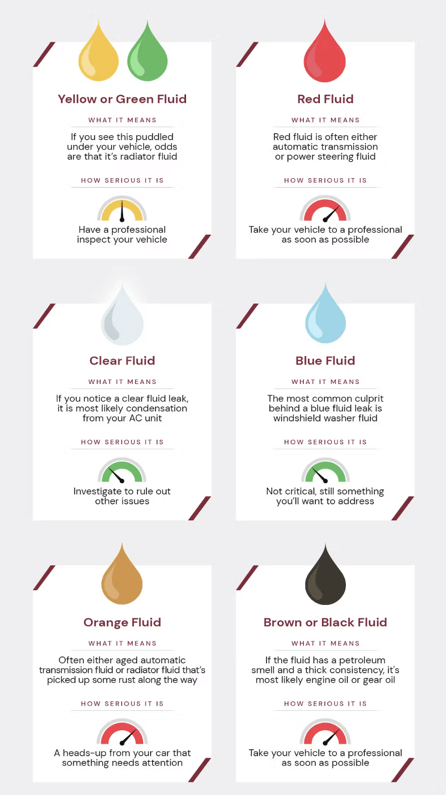
Transmission Fluid Leak Color
1. Red Transmission Fluid
Red is the standard color for healthy, new transmission fluid. Bright red fluid indicates that your transmission is in good condition and the fluid is effectively lubricating and protecting the system. Many manufacturers dye their transmission fluids red for easy identification and to distinguish them from other automotive fluids.
If you notice a leak and the fluid is bright red, it usually means the leak is recent, and the fluid is still in good condition. However, even with red fluid, a leak should not be ignored, as it can lead to low transmission fluid levels and potential damage over time.
2. Dark Red or Brown Transmission Fluid
Over time, transmission fluid naturally darkens due to heat and contamination. Dark red or brown fluid is a warning sign that your transmission fluid is aging or breaking down. It may still lubricate the system, but it’s losing its effectiveness.
Fluid that has turned brown may indicate that the transmission is overheating, the fluid has not been changed regularly, or there’s internal wear in the system. Continuing to drive with dark fluid can lead to increased friction, gear slippage, and eventual transmission failure.
Related Red Fluid Leaking from Truck(4 Causes + Solutions)
3. Black Transmission Fluid
Black transmission fluid is a serious warning sign. It typically indicates that the fluid is burned, contaminated, or both. Burning occurs when the transmission overheats, often due to low fluid levels or excessive load. Contamination can result from metal shavings or debris from worn internal components.
If you see black transmission fluid leaking, it’s crucial to stop driving immediately and have your vehicle inspected. Continuing to drive can cause catastrophic damage, often requiring a full transmission rebuild or replacement.
4. Milky or Opaque Fluid
Transmission fluid that appears milky or opaque is usually a sign that water or coolant has entered the system. This can happen due to a failed cooler or a leak in the radiator where transmission fluid is circulated for cooling.
Milky fluid can severely damage the transmission, as it loses its lubricating properties and can cause corrosion. This type of leak requires urgent attention, as water-contaminated fluid can quickly ruin your transmission.
5. Green or Blue Transmission Fluid
Although rare, some aftermarket or specialty transmission fluids may appear green or blue. While not necessarily harmful if intended for your vehicle, if you notice an unusual color that doesn’t match your transmission’s original fluid, it could indicate contamination or the use of the wrong fluid. Always refer to your vehicle’s manual for the correct fluid type.
Related Automatic Transmission Fluid Color Chart(All Colors)
How to Identify a Transmission Fluid Leak
Knowing the color of the fluid is just one step in diagnosing a leak. Here are some tips to identify a transmission fluid leak:
- Check the Location: Transmission fluid typically leaks from the transmission pan, seals, or cooler lines. If you notice fluid under your vehicle near the center or front, it may be transmission fluid.
- Inspect the Consistency: Transmission fluid is slippery and has a slightly sweet or tart smell. This distinguishes it from engine oil (which is darker and has a burnt smell) or brake fluid (which is thinner and clear to yellow).
- Monitor Fluid Levels: Regularly check your transmission fluid dipstick if your vehicle has one. Low fluid levels can indicate a leak even before visible puddles appear.
Related Why Is Transmission Fluid Leaking From My Car(8 Causes + Solutions)
Causes of Transmission Fluid Leaks
Transmission fluid leaks can occur for a variety of reasons, including:
- Worn or damaged seals and gaskets
- Loose or cracked transmission pan bolts
- Damaged transmission cooler lines
- Overheating or excessive pressure in the transmission
- Corrosion or cracks in the transmission housing
Identifying the color of the fluid helps you pinpoint the cause and urgency of the leak. For example, bright red fluid from a small pan gasket leak is less urgent than black, burnt fluid from an overheated transmission.
Preventing Transmission Fluid Leaks
Preventing leaks and maintaining proper fluid health is essential for transmission longevity. Some preventive measures include:
- Regular Fluid Changes: Follow your manufacturer’s recommended transmission fluid change intervals. Fresh fluid reduces wear and prevents overheating.
- Check for Leaks Early: Inspect your vehicle regularly for fluid puddles or spots. Early detection can prevent major damage.
- Use the Correct Fluid: Always use the transmission fluid specified by your vehicle manufacturer to ensure proper lubrication and cooling.
- Maintain Transmission Components: Replace worn seals, gaskets, and cooler lines as needed to prevent leaks.
Related What Can Cause Transmission Fluid to Leak(11 Causes + Solutions)
FAQs
How do I tell if I’m leaking transmission fluid?
You can tell if your vehicle is leaking transmission fluid by checking for bright red or dark fluid spots under your car, usually near the center or front. Transmission fluid is slippery, slightly sweet-smelling, and has a distinct color compared to engine oil or brake fluid. Regularly checking your transmission fluid level and looking for puddles can help identify leaks early.
Can I drive my car if it’s leaking transmission fluid?
Driving with a transmission fluid leak is risky. Low fluid levels can cause overheating, slipping gears, or even complete transmission failure. If the leak is minor, you may drive a short distance, but it’s best to top up the fluid and have the vehicle inspected as soon as possible to avoid costly damage.
What happens right before your transmission goes out?
Signs that your transmission is failing include delayed or rough shifting, slipping gears, strange noises like grinding or whining, fluid leaks, and a burning smell. You may also notice a lack of response when accelerating or unusual vibrations. Ignoring these warning signs can lead to complete transmission failure.
Where is the most common place for a transmission to leak?
The most common sources of transmission leaks are the pan gasket, seals around the output and input shafts, and transmission cooler lines. Leaks often appear under the front or center of the vehicle, where the transmission sits. Regular inspections can help catch leaks from these areas early.
What color is bad transmission fluid?
Bad transmission fluid can appear dark brown, black, or milky. Dark brown or black fluid indicates burning or contamination, while milky fluid suggests water or coolant contamination. Bright red fluid is healthy, but fluid that loses its color or becomes dark signals potential transmission issues.
What are the warning signs of transmission failure?
Warning signs of transmission failure include slipping gears, delayed or rough shifting, fluid leaks, unusual noises, burning smells, and dashboard warning lights. Poor acceleration, vibrations, or difficulty shifting are also common indicators. Addressing these symptoms early can prevent complete transmission damage.
Final words
Transmission fluid leaks can range from minor issues to serious warnings of transmission failure. The color of the fluid provides a quick and effective way to assess the condition of your transmission.
Bright red fluid generally indicates healthy fluid, while dark brown, black, or milky fluid signals potential problems that require immediate attention.
By recognizing these colors and understanding what they mean, you can take the necessary steps to maintain your transmission, avoid costly repairs, and keep your vehicle running smoothly.