

Using the wrong fluid can result in poor performance, overheating, or even transmission failure. This guide will provide an overview of CVT transmission fluid, why it is essential, and a detailed chart of CVT fluid types for popular vehicles.
CVT Transmission Fluid
Nissan
| Vehicle Model | CVT Fluid Type | Recommended Change Interval | Notes |
|---|---|---|---|
| Altima (2019–2025) | Nissan NS-3 | 60,000 miles | Do not use standard ATF |
| Rogue (2017–2025) | Nissan NS-3 | 60,000 miles | Use genuine NS-3 only |
| Sentra (2016–2025) | Nissan NS-2 / NS-3 | 60,000 miles | Early models use NS-2 |
| Murano (2015–2025) | Nissan NS-3 | 60,000 miles | Use only genuine NS-3 fluid |
| Pathfinder (2017–2025) | Nissan NS-3 | 60,000 miles | Check 4WD models separately |
| Versa (2015–2025) | Nissan NS-2 / NS-3 | 60,000 miles | Do not substitute with ATF |
Toyota
| Vehicle Model | CVT Fluid Type | Recommended Change Interval | Notes |
|---|---|---|---|
| Corolla (2019–2025) | Toyota CVT Fluid FE | 60,000 miles | Suitable for all CVT-equipped Corollas |
| Camry (2018–2025) | Toyota CVT Fluid FE | 60,000 miles | Use only genuine fluid |
| RAV4 (2016–2025) | Toyota TC / CVT Fluid FE | 50,000–60,000 miles | Check manual for 4WD models |
| Prius (2016–2025) | Toyota CVT FE | 50,000–60,000 miles | Hybrid CVTs require FE fluid |
| Avalon (2016–2025) | Toyota CVT Fluid FE | 50,000–60,000 miles | Use genuine Toyota fluid only |
| Corolla Hatchback (2019–2025) | Toyota CVT Fluid FE | 60,000 miles | Do not use standard ATF |
Related Transaxle Fluid Transmission Fluid(For All Car Models)
Honda
| Vehicle Model | CVT Fluid Type | Recommended Change Interval | Notes |
|---|---|---|---|
| Civic (2016–2025) | Honda HCF-2 | 30,000–50,000 miles | Critical to use HCF-2, not ATF |
| CR-V (2015–2025) | Honda HCF-2 | 30,000–50,000 miles | Some early 2015 models use HCF-2 only |
| HR-V (2016–2025) | Honda HCF-2 | 30,000–50,000 miles | Do not substitute with ATF |
| Insight (2019–2025) | Honda HCF-2 | 30,000–50,000 miles | Hybrid CVTs use HCF-2 |
| Fit (2015–2020) | Honda HCF-2 | 30,000–50,000 miles | CVT-only models require HCF-2 |
| Accord (2018–2025) | Honda HCF-2 | 30,000–50,000 miles | Check hybrid models separately |
Subaru
| Vehicle Model | CVT Fluid Type | Recommended Change Interval | Notes |
|---|---|---|---|
| Outback (2015–2025) | Subaru CVT Fluid | 30,000–60,000 miles | Always use Subaru-approved CVT fluid |
| Forester (2014–2025) | Subaru CVT Fluid | 30,000–60,000 miles | Avoid generic ATF |
| Legacy (2016–2025) | Subaru CVT Fluid | 30,000–60,000 miles | Check dipstick method |
| Crosstrek (2015–2025) | Subaru CVT Fluid | 30,000–60,000 miles | Genuine Subaru fluid only |
| Impreza (2016–2025) | Subaru CVT Fluid | 30,000–60,000 miles | CVT models only |
| Ascent (2019–2025) | Subaru CVT Fluid | 30,000–60,000 miles | Use manufacturer-approved fluid |
Related Nissan CVT Transmission Fluid Change Cost(Complete Guide)
Mitsubishi
| Vehicle Model | CVT Fluid Type | Recommended Change Interval | Notes |
|---|---|---|---|
| Outlander (2016–2025) | Mitsubishi CVT Fluid | 40,000 miles | Consult manual for variation |
| Eclipse Cross (2018–2025) | Mitsubishi CVT Fluid | 40,000 miles | Use genuine fluid only |
| Mirage (2017–2025) | Mitsubishi CVT Fluid | 40,000 miles | Use only approved CVT fluid |
| Outlander Sport (2016–2025) | Mitsubishi CVT Fluid | 40,000 miles | Genuine fluid required |
| Lancer (2016–2017) | Mitsubishi CVT Fluid | 40,000 miles | Short production run, check manual |
Ford
| Vehicle Model | CVT Fluid Type | Recommended Change Interval | Notes |
|---|---|---|---|
| Escape (2013–2025) | Motorcraft CVT+4 | 50,000 miles | Follow Ford’s service bulletin |
| Fusion (2013–2020) | Motorcraft CVT+4 | 50,000 miles | Avoid using standard ATF |
| Focus (2015–2018) | Motorcraft CVT+4 | 50,000 miles | Only use approved CVT fluid |
| C-Max (2013–2018) | Motorcraft CVT+4 | 50,000 miles | Early models CVT+4 mandatory |
| Transit Connect (2014–2020) | Motorcraft CVT+4 | 50,000 miles | Use only CVT+4 |
Related Ford Transmission Fluid Chart(For All Models)
Kia
| Vehicle Model | CVT Fluid Type | Recommended Change Interval | Notes |
|---|---|---|---|
| Soul (2015–2025) | Kia CVTF SP-IV | 60,000 miles | SP-IV required for belt-type CVT |
| Sportage (2017–2025) | Kia CVTF SP-IV | 60,000 miles | Use only approved fluid |
| Forte (2017–2025) | Kia CVTF SP-IV | 60,000 miles | CVT-only trims require SP-IV |
| Niro (2017–2025) | Kia CVTF SP-IV | 60,000 miles | Hybrid CVTs use SP-IV |
| Seltos (2020–2025) | Kia CVTF SP-IV | 60,000 miles | Genuine SP-IV recommended |
Hyundai
| Vehicle Model | CVT Fluid Type | Recommended Change Interval | Notes |
|---|---|---|---|
| Elantra (2017–2025) | Hyundai CVTF | 60,000 miles | Genuine Hyundai CVTF essential |
| Tucson (2016–2025) | Hyundai CVTF | 60,000 miles | Check dipstick method |
| Sonata (2015–2025) | Hyundai CVTF | 60,000 miles | CVT fluid mandatory for belt CVT |
| Kona (2018–2025) | Hyundai CVTF | 60,000 miles | Use only approved fluid |
| Ioniq (2017–2025) | Hyundai CVTF | 60,000 miles | Hybrid CVT models require CVTF |
Related Hyundai SP-IV Automatic Transmission Fluid(Top 3 Best Picks)
Audi
| Vehicle Model | CVT Fluid Type | Recommended Change Interval | Notes |
|---|---|---|---|
| A4 (2017–2025) | ZF LifeguardFluid CVT | 40,000–50,000 miles | European CVTs require ZF fluid |
| Q5 (2018–2025) | ZF LifeguardFluid CVT | 40,000–50,000 miles | Follow dealer service recommendations |
| A3 (2016–2025) | ZF LifeguardFluid CVT | 40,000–50,000 miles | Use only ZF-approved CVT fluid |
| Q3 (2019–2025) | ZF LifeguardFluid CVT | 40,000–50,000 miles | Check manual for hybrid trims |
Chevrolet
| Vehicle Model | CVT Fluid Type | Recommended Change Interval | Notes |
|---|---|---|---|
| Malibu (2016–2020) | DEX-CVT | 45,000–60,000 miles | Avoid using DEX III ATF |
| Equinox (2018–2025) | DEX-CVT | 45,000–60,000 miles | Use only approved CVT fluid |
| Spark (2016–2025) | DEX-CVT | 45,000–60,000 miles | Do not substitute with ATF |
| Trax (2017–2025) | DEX-CVT | 45,000–60,000 miles | Genuine CVT fluid required |
| Volt (2016–2019) | DEX-CVT | 45,000–60,000 miles | Hybrid CVT only |
Related Motorcraft Transmission Fluid Chart(For All Models)
Jeep
| Vehicle Model | CVT Fluid Type | Recommended Change Interval | Notes |
|---|---|---|---|
| Cherokee (2015–2025) | CVT+ | 50,000 miles | Some models require Mopar CVT fluid |
| Compass (2017–2025) | CVT+ | 50,000 miles | Critical to avoid generic ATF |
| Renegade (2016–2025) | CVT+ | 50,000 miles | CVT-only trims require CVT+ |
| Patriot (2016–2017) | CVT+ | 50,000 miles | Short production run, check manual |
Infiniti
| Vehicle Model | CVT Fluid Type | Recommended Change Interval | Notes |
|---|---|---|---|
| Q50 (2014–2025) | Nissan NS-3 | 60,000 miles | Infiniti CVTs use Nissan-approved fluid |
| Q60 (2016–2025) | Nissan NS-3 | 60,000 miles | Do not substitute with standard ATF |
| QX50 (2014–2025) | Nissan NS-3 | 60,000 miles | Use genuine NS-3 fluid |
| QX60 (2015–2025) | Nissan NS-3 | 60,000 miles | CVT only, check manual for hybrid trims |
| QX30 (2017–2020) | Nissan NS-3 | 60,000 miles | Early models NS-3 required |
Related Transmission Fluid Change Calculator
Mazda
| Vehicle Model | CVT Fluid Type | Recommended Change Interval | Notes |
|---|---|---|---|
| Mazda3 (2016–2025) | Mazda CVT Fluid | 50,000–60,000 miles | CVT trims only, use genuine fluid |
| Mazda6 (2016–2025) | Mazda CVT Fluid | 50,000–60,000 miles | Do not use generic ATF |
| CX-3 (2016–2021) | Mazda CVT Fluid | 50,000–60,000 miles | Belt-type CVT only |
| CX-30 (2019–2025) | Mazda CVT Fluid | 50,000–60,000 miles | Use Mazda-approved fluid |
| CX-5 (2017–2025) | Mazda CVT Fluid | 50,000–60,000 miles | Some trims may have traditional AT |
Volkswagen
| Vehicle Model | CVT Fluid Type | Recommended Change Interval | Notes |
|---|---|---|---|
| Jetta (2016–2025) | VW G-052-180-A2 | 40,000–50,000 miles | Use only VW-approved CVT fluid |
| Passat (2016–2025) | VW G-052-180-A2 | 40,000–50,000 miles | Avoid generic ATF |
| Tiguan (2018–2025) | VW G-052-180-A2 | 40,000–50,000 miles | CVT-only trims |
| Golf (2016–2025) | VW G-052-180-A2 | 40,000–50,000 miles | Use genuine fluid only |
| Arteon (2019–2025) | VW G-052-180-A2 | 40,000–50,000 miles | Check service manual for hybrid |
Mercedes-Benz
| Vehicle Model | CVT Fluid Type | Recommended Change Interval | Notes |
|---|---|---|---|
| A-Class (2019–2025) | MB 236.20 / CVT Fluid | 40,000–50,000 miles | Only use Mercedes-approved CVT fluid |
| B-Class (2016–2025) | MB 236.20 / CVT Fluid | 40,000–50,000 miles | CVT models only |
| CLA-Class (2017–2025) | MB 236.20 / CVT Fluid | 40,000–50,000 miles | Use genuine fluid |
| GLA-Class (2018–2025) | MB 236.20 / CVT Fluid | 40,000–50,000 miles | Check hybrid models separately |
| GLB-Class (2020–2025) | MB 236.20 / CVT Fluid | 40,000–50,000 miles | CVT fluid mandatory |
BMW
| Vehicle Model | CVT Fluid Type | Recommended Change Interval | Notes |
|---|---|---|---|
| i3 (2014–2021) | BMW CVT Fluid | 50,000 miles | EV/Range-extended models only |
| X1 (2016–2025) | ZF LifeguardFluid CVT | 40,000–50,000 miles | CVT-equipped trims only |
| X2 (2018–2025) | ZF LifeguardFluid CVT | 40,000–50,000 miles | Use approved ZF fluid only |
| 2 Series Active Tourer (2015–2025) | ZF LifeguardFluid CVT | 40,000–50,000 miles | Check hybrid trims separately |
| 1 Series F40 (2019–2025) | ZF LifeguardFluid CVT | 40,000–50,000 miles | Only CVT trims |
Acura
| Vehicle Model | CVT Fluid Type | Recommended Change Interval | Notes |
|---|---|---|---|
| ILX (2016–2025) | Acura HCF-2 | 30,000–50,000 miles | CVT models only |
| TLX (2015–2025) | Acura HCF-2 | 30,000–50,000 miles | Hybrid trims may vary |
| RDX (2016–2025) | Acura HCF-2 | 30,000–50,000 miles | Use genuine HCF-2 only |
| MDX (2019–2025) | Acura HCF-2 | 30,000–50,000 miles | Check AWD models |
| Integra (2022–2025) | Acura HCF-2 | 30,000–50,000 miles | CVT-only trims |
Best CVT Transmission Fluid
1. Castrol Transmax ATF/CVT Universal Fluid
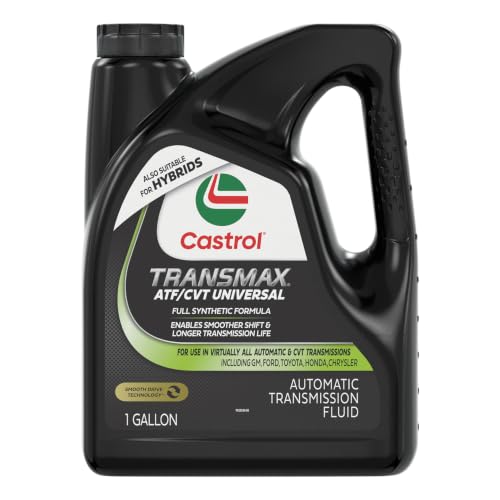
- For most automatic and & continuously variable transmissions including Ford, GM, Chrysler and Asian Imports
- Enhanced friction durability for smooth transmission performance
- Superior high temperature protection to effectively resist oxidation
One of the most popular and widely sold CVT fluids on Amazon. It is designed for multiple CVT applications and is commonly used as a universal aftermarket option.
- Full synthetic formulation
- Compatible with many belt and chain CVT systems
- Strong anti-shudder performance
- Good heat and oxidation resistance
- Consistently high customer ratings and sales volume
2. Valvoline CVT Full Synthetic Transmission Fluid
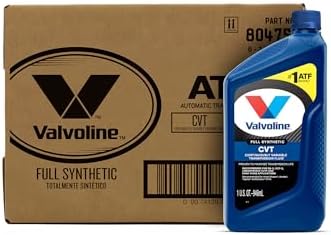
- Formulated with full-synthetic base stocks and advanced additive technology to meet the challenging demands of CVT trans…
- Excellent metal-to-metal protection and anti-shudder performance
- Developed with anti-wear technology to help improve transmission durability
A best-selling aftermarket CVT fluid in the United States, known for smooth operation and dependable protection.
- Full synthetic CVT-specific formula
- Helps reduce shudder and vibration
- Stable friction control for modern CVTs
- Popular for Nissan, Honda, and Subaru applications
- Strong reputation for reliability
3. Nissan Genuine CVT Fluid NS-3

- Synthetic & Mineral Blend: Ensures smooth transmission operation and enhanced durability
- 6 Quarts: Ideal for full transmission fluid change in most Nissan vehicles
- Nissan Genuine: Engineered specifically for Nissan transmissions
A top-selling OEM fluid for Nissan vehicles equipped with CVT transmissions.
- Factory-approved Nissan fluid
- Specifically designed for Jatco CVT systems
- Ensures full compatibility and performance
- Helps maintain transmission longevity
- Recommended for Nissan CVT models
4. Subaru Genuine CVT Fluid (CVTF-II / CVTF-III)

- 6 Quarts of genuine Subaru CVTF-II fluid
- SOA427V1660 x6 This is green fluid
- 2013-2019 Crosstrek with CVT NON HYBRID, 2014-2016 Crosstrek CVT HYBRID
A commonly purchased OEM fluid for Subaru CVT-equipped vehicles.
- Original Subaru factory fluid
- Designed for Lineartronic CVT systems
- Provides smooth shifting and protection under load
- Helps reduce wear and shudder
- Best suited for Subaru models like the Outback and Forester
5. Honda Genuine HCF-2 CVT Fluid

- genuine oem factory part
- exact fit
- durable
A top-selling OEM CVT fluid specifically formulated for Honda vehicles.
- OEM Honda specification fluid
- Maintains correct friction balance for CVTs
- Supports smooth acceleration and shifting
- Helps prevent overheating and wear
- Recommended for Civic, Accord, and CR-V CVTs
What is CVT Transmission Fluid?
CVT transmission fluid is a specialized lubricant designed to:
- Provide smooth and efficient belt/pulley operation.
- Reduce wear on metal components.
- Maintain proper temperature control under high stress.
- Prevent slippage or shuddering, common in CVTs.
CVT fluids differ significantly from standard automatic transmission fluids (ATF). While conventional ATF focuses on hydraulic pressure and friction modifiers for clutch packs, CVT fluids prioritize belt and pulley friction characteristics to ensure the CVT can operate efficiently without slipping.
Signs You Need to Change Your CVT Fluid
Regular CVT fluid maintenance is crucial. Signs your fluid may need replacement include:
- Delayed acceleration or sluggish response.
- Shuddering or jerking during acceleration.
- Burning smell from the transmission.
- Warning lights indicating transmission issues.
Most manufacturers recommend changing CVT fluid every 30,000 to 60,000 miles, but check your owner’s manual as requirements vary by make and model.
How to Check and Replace CVT Fluid
1. Locate the CVT dipstick (if available). Some modern CVTs are sealed and require professional service.
2. Check the fluid level with the engine warm and running, following the manufacturer’s instructions.
3. Observe fluid color: healthy CVT fluid is usually green, red, or amber. Dark or burnt-smelling fluid indicates degradation.
4. Drain and replace fluid with the recommended CVT fluid type. Always use fluids approved by the vehicle manufacturer.
Failing to use the correct CVT fluid can void your transmission warranty and lead to costly repairs.
CVT Transmission Fluid Types
CVT fluids are often branded differently by manufacturers, but some common types include:
- NS-2 / NS-3: Used in Nissan CVTs.
- Toyota CVT Fluid FE / TC: Designed for Toyota CVTs.
- Honda HCF-2: Used in many Honda CVTs.
- ZF LifeguardFluid CVT: Found in some European models.
FAQs
How often should CVT transmission fluid be changed?
CVT transmission fluid should generally be changed every 30,000 to 60,000 miles, depending on the manufacturer and vehicle model. Some vehicles, especially those under heavy use or in extreme climates, may require more frequent changes.
What type of transmission fluid does a CVT take?
CVT transmissions require specialized CVT fluid, not standard automatic transmission fluid (ATF). Examples include Nissan NS-2/NS-3, Toyota CVT FE, Honda HCF-2, ZF LifeguardFluid CVT, and Mitsubishi CVT Fluid. Using the wrong fluid can cause slipping, shuddering, or permanent transmission damage. Always use manufacturer-approved CVT fluid for your specific vehicle.
Why do people avoid CVT?
Some drivers avoid CVTs because:
- Different driving feel: CVTs do not have traditional gear shifts, which some people find “rubbery” or unnatural.
- Costly repairs: CVTs are expensive to repair or replace if they fail.
- Maintenance sensitivity: CVTs require specific fluids and strict maintenance schedules.
- Past reliability concerns: Older CVT models were prone to overheating or early wear.
Despite these concerns, modern CVTs are more reliable and provide excellent fuel efficiency and smooth acceleration.
How do I know if my CVT transmission needs oil?
Signs your CVT transmission may need new fluid include:
- Delayed or sluggish acceleration
- Shuddering, jerking, or vibration during gear changes
- Burning smell coming from the transmission
- Dashboard warning lights indicating transmission issues
- Fluid that is dark, cloudy, or smells burnt when checked at the dipstick
If you notice any of these signs, inspect the fluid level and color, and replace it with the correct CVT fluid if necessary.
What happens if I don’t change my CVT fluid?
Failing to change CVT fluid can lead to:
- Premature wear on belts and pulleys
- Overheating, causing reduced transmission efficiency
- Shuddering or slipping during acceleration
- Potential transmission failure, which can be very expensive to repair
- Voided warranty, if the manufacturer specifies maintenance requirements
Regular fluid changes are essential to prevent these issues and extend transmission life.
What ruins a CVT transmission?
A CVT transmission can be ruined by:
- Using the wrong fluid or low-quality substitutes
- Neglecting fluid changes or running the transmission low on fluid
- Overheating due to heavy towing or prolonged high-load driving
- Aggressive driving that exceeds the CVT’s torque or heat limits
- Mechanical wear from age or lack of maintenance