

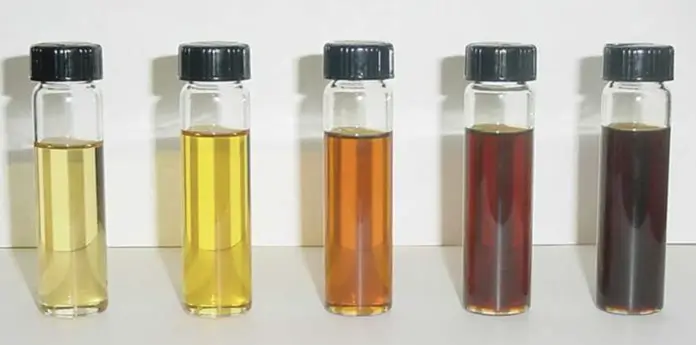
The color of hydraulic oil is more than just an appearance, it serves as a quick visual indicator of the condition, contamination level, and overall health of your hydraulic system.
Hydraulic Oil Color
1. Clear to Light Amber (Normal Condition)
New hydraulic oil usually appears:
- Transparent
- Light amber
- Golden or straw-colored
This color indicates the oil is clean and free from contamination. It has not been oxidized or broken down by excessive heat.
If your hydraulic oil looks like this, your system is likely operating properly.
2. Dark Brown or Black Hydraulic Oil
If hydraulic oil turns dark brown or black, it may indicate:
- Oxidation due to high temperatures
- Excessive heat exposure
- Degraded additives
- Presence of soot or carbon
- Contamination from worn seals
When oil oxidizes, it loses its lubricating properties and becomes thicker. This can lead to:
- Sluggish hydraulic response
- Increased wear
- Pump damage
- Seal failure
If your hydraulic oil appears very dark or black, it’s usually time for replacement and system inspection.
Related Automatic Transmission Fluid Color Chart(All Colors)
3. Milky or Cloudy Hydraulic Oil
Milky or cloudy oil typically means water contamination.
Water can enter the system through:
- Condensation
- Damaged seals
- Poor storage practices
- High-humidity environments
Water in hydraulic oil causes:
- Rust and corrosion
- Reduced lubrication
- Cavitation damage
- Component failure
If the oil looks milky, you should drain it immediately and identify the source of water intrusion.
4. Reddish Hydraulic Oil
Some hydraulic oils are intentionally dyed red for identification. However, if oil suddenly turns reddish, it may indicate:
- Mixing with transmission fluid
- Cross-contamination
- Chemical reaction between incompatible fluids
Always verify you’re using the correct fluid recommended by the equipment manufacturer.
Related Transmission Fluid Leak Color(For All Colors + Solutions)
5. Green Hydraulic Oil
Green hydraulic oil is less common but may result from:
- Dye additives
- Mixing with coolant
- Chemical contamination
If you notice green discoloration and it was not originally green, inspect for internal leaks or contamination.
6. Foamy or Aerated Appearance
If hydraulic oil appears foamy or bubbly, this indicates air contamination.
Causes include:
- Loose fittings
- Low oil level
- Air leaks in suction lines
- Faulty pump seals
Aerated oil reduces system efficiency and can cause overheating and pump damage.
Related Is Transmission Fluid Green(Normal or a Warning)
Why Hydraulic Oil Changes Color
Hydraulic oil color changes due to several factors:
1. Oxidation
Heat and oxygen cause oil to oxidize. Oxidation results in:
- Darkening color
- Increased acidity
- Sludge formation
- Thickened oil
High operating temperatures accelerate oxidation.
2. Contamination
Common contaminants include:
- Water
- Dirt and dust
- Metal particles
- Coolant
- Fuel
Contamination often causes cloudiness, unusual color shifts, or sediment buildup.
3. Additive Breakdown
Hydraulic oils contain additives for:
- Anti-wear protection
- Corrosion resistance
- Anti-foam control
- Oxidation resistance
As additives degrade, oil color may darken or change.
4. High Operating Temperatures
Continuous overheating:
- Burns additives
- Speeds up oxidation
- Darkens oil
- Reduces viscosity stability
Hydraulic systems should operate within recommended temperature ranges to prevent oil degradation.
Related Car Lift Hydraulic Fluid(Top 5 Best Picks 2026)
Is Color Alone Enough to Judge Hydraulic Oil?
No. While color provides clues, it is not the only indicator of oil condition.
For accurate analysis, consider:
- Oil analysis testing
- Viscosity testing
- Particle count testing
- Acid number testing
- Water content analysis
Professional oil analysis can detect problems long before visible color changes occur.
When Should You Change Hydraulic Oil?
You should consider changing hydraulic oil if:
- It becomes very dark or black
- It appears milky or cloudy
- It smells burnt
- Sludge is visible
- Performance becomes sluggish
- The manufacturer’s service interval is reached
Always follow your equipment manufacturer’s recommended oil change intervals.
Related Low Brake Fluid Symptoms(8 Signs + Solutions)
How to Prevent Hydraulic Oil Discoloration
Here are practical tips to maintain proper hydraulic oil color and condition:
1. Use the Correct Oil
Always use the viscosity grade and specification recommended by the manufacturer.
2. Store Oil Properly
- Keep containers sealed
- Store indoors
- Avoid moisture exposure
3. Maintain Proper Operating Temperature
- Ensure cooling systems are working
- Avoid overloading equipment
- Monitor system temperature
4. Replace Filters Regularly
Hydraulic filters remove contaminants that can discolor oil.
5. Inspect Seals and Hoses
Prevent water and dirt from entering the system.
Does Dark Oil Always Mean It’s Bad?
Not necessarily.
Some hydraulic oils darken slightly during normal use due to heat and additive reaction. Slight darkening without performance issues may be acceptable.
However, very dark, thick, or burnt-smelling oil is a warning sign.
The Cost of Ignoring Hydraulic Oil Color
Failing to monitor hydraulic oil condition can lead to:
- Pump failure
- Cylinder scoring
- Valve sticking
- Seal damage
- Complete hydraulic system failure
Replacing hydraulic oil is far cheaper than replacing hydraulic pumps or cylinders.
FAQs
What color is the hydraulic oil?
Hydraulic oil is typically clear to light amber (golden or straw-colored) when new. Most mineral-based hydraulic fluids have a transparent appearance that allows you to see through the oil easily.
Some manufacturers may add dye for identification purposes, which can make the oil appear red, blue, or green. However, in most industrial and heavy equipment applications, clean hydraulic oil is light amber and transparent.
What is the difference between red and clear hydraulic oil?
The main difference between red and clear hydraulic oil is dye and application, not necessarily performance.
- Red hydraulic oil is often dyed for identification. It is commonly used in systems where hydraulic fluid must be distinguished from engine oil or other lubricants. Some transmission fluids also appear red.
- Clear (light amber) hydraulic oil is the natural color of most standard mineral-based hydraulic fluids.
Performance depends on the oil’s viscosity grade and specification, not its color. Always follow your equipment manufacturer’s recommendations rather than relying on color alone.
What color is bad hydraulic fluid?
Bad hydraulic fluid usually appears:
- Dark brown or black
- Milky or cloudy
- Foamy or aerated
Dark or black oil often indicates oxidation or overheating. Milky oil suggests water contamination. Foamy oil indicates air contamination. Any of these conditions can reduce lubrication, increase wear, and lead to hydraulic system damage.
If hydraulic fluid looks significantly different from its original color, it should be inspected and possibly replaced.
What causes hydraulic oil to turn black?
Hydraulic oil turns black mainly due to:
- Oxidation from high temperatures
- Additive breakdown
- Contamination with dirt or metal particles
- Burnt oil from overheating
- Extended service intervals without changing oil
When hydraulic oil overheats, chemical reactions occur between oxygen and the base oil, forming sludge and carbon deposits. This darkens the oil and reduces its ability to lubricate and protect components.
Persistent black oil may indicate a cooling system issue or excessive system load.
What are the 4 types of hydraulic fluid?
1. Mineral-Based Hydraulic Oil
The most common type is derived from refined petroleum. Used in construction, agriculture, and industrial machinery.
2. Water-Based Hydraulic Fluid
Includes water-glycol fluids and emulsions. Often used where fire resistance is required.
3. Synthetic Hydraulic Fluid
Engineered fluids designed for extreme temperatures and demanding applications. They offer excellent oxidation resistance and longer service life.
4. Biodegradable Hydraulic Fluid
Environmentally friendly fluids made from vegetable oils or synthetic esters. Used in environmentally sensitive areas such as forestry and marine operations.
Each type has specific advantages depending on the application, temperature range, and environmental requirements.
What is the normal color of oil?
The normal color of fresh oil, whether hydraulic oil, engine oil, or gear oil, is typically:
- Clear
- Light amber
- Golden
As oil is used, it may gradually darken. Slight darkening is normal, but very dark, black, or milky oil indicates contamination or degradation.
Final Thoughts
Hydraulic oil color is a simple but powerful diagnostic tool. Fresh oil should be clear and light amber. Any significant color change – especially dark brown, black, or milky – should not be ignored.
By regularly inspecting hydraulic oil, maintaining proper service intervals, and preventing contamination, you can extend the life of your equipment, improve its performance, and reduce costly repairs.
If you operate heavy equipment, tractors, or industrial machinery, make hydraulic oil inspection part of your routine maintenance checklist. It takes only minutes but can save thousands in repairs.