

In this guide, we explain how transmission fluid coolers work, when you might need one, what to consider when buying one, and five products worth considering.
Transmission Fluid Cooler
1. Hayden Automotive 678 Rapid-Cool Transmission Cooler

- Size Is 3/4 Inch X 11 Inch X 9-1/2 Inch
- Pick-Up Trucks And Vans, Class “C” Motor Homes , Travel Trailers To 24 Feet
- Gvwr Up To 24,000 Pounds, Towing Up To 5,000 Pounds
The Hayden Automotive 678 Rapid-Cool is an auxiliary transmission cooler worth considering for compatible passenger vehicles and light-duty trucks. Its compact design makes it a practical option for installations where space is limited.
Features:
- Plate-and-fin cooling design.
- Approximately 11 x 9.5 x 0.75 inches.
- Designed for supplemental automatic transmission fluid cooling.
- Compact construction for flexible mounting.
- Intended as an add-on cooler, not a universal direct replacement for the factory cooler.
Best for: Drivers looking for a compact auxiliary cooler for everyday driving or moderate workloads.
Related Transmission Fluid Cleaner(Top 5 Best Picks 2026)
2. JEGS XHP Transmission Cooler (18,000 GVW)

- Designed for vehicles with a gross vehicle weight rating of 18,000 pounds, this transmission cooler ensures reliable per…
- XHP Transmission Cooler; 18; 000 GVW
- Designed for a secure connection in fluid transfer systems; Includes:
The JEGS XHP Transmission Cooler is an aftermarket option to consider for vehicles that need additional transmission fluid cooling. It is worth evaluating for compatible cars and light-duty trucks used for everyday driving or demanding workloads.
Features:
- Designed for supplemental automatic transmission fluid cooling.
- Intended for compatible vehicle applications.
- Suitable for consideration in certain towing and hauling setups.
- Requires adequate airflow and secure mounting.
- Verify cooler dimensions, fittings, installation hardware, and current availability before purchasing.
Best for: Drivers looking for an alternative to the discontinued B&M 70268 SuperCooler.
3. Mishimoto MMTC-UNI Universal Transmission Cooler
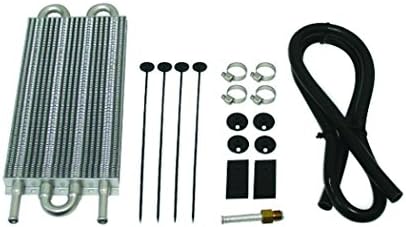
- Universal mounting for use in any application
- Height: 5″ / Length: 15.5″ / Thickness: 3/4″ / Core: 12″
- 3/8″ push-on fittings for ease of installation
The Mishimoto MMTC-UNI is a universal transmission cooler option for custom installations. Before purchasing, confirm the exact package contents and specifications because Mishimoto offers multiple cooler designs.
Features:
- Designed for auxiliary transmission fluid cooling.
- Universal-style installation for compatible applications.
- Intended to help manage heat during demanding driving.
- Requires suitable mounting space and compatible plumbing.
- Installation hardware and fittings should be confirmed against the specific listing.
Best for: Vehicle owners building a custom cooling setup or upgrading a compatible existing system.
Related Transmission Fluid Additive for Cooling(Top 5 Best Picks)
4. Derale Performance 13504 Series 8000 Transmission Cooler

- Embossed turbulators inserted in each tube agitate fluid for maximum heat transfer
- Extruded plastic cooling fin guards
- Improves transmission performance
The Derale Performance 13504 is a plate-and-fin transmission cooler designed for supplemental fluid cooling. Its rectangular design can suit a range of custom installations, provided sufficient airflow and clearance are available.
Features:
- Plate-and-fin heat exchanger.
- Approximately 11 x 12 x 7/8 inches.
- Designed for automatic transmission fluid cooling.
- Relatively compact profile for mounting flexibility.
- Requires compatible fittings and properly routed transmission lines.
Best for: Drivers comparing aftermarket plate-and-fin coolers for light trucks and other compatible vehicles.
5. EVIL ENERGY 5/16-Inch Transmission Oil Cooler Kit

- Universal: This transmission cooler is suitable for most cars with 5/16″ ID transmission cooler lines. Please ensure the…
- Cooler: Material: The trans oil cooler is made of aluminum alloy; Size: 15.66″ × 5″ × 0.75″.
- Hose: Material: The hose is made of CPE; Working pressure: 145 PSI. Bursting pressure: 900 PSI; Working temperature rang…
The EVIL ENERGY 5/16-inch Transmission Oil Cooler Kit is a universal auxiliary cooler designed to help reduce automatic transmission fluid temperatures. It features an aluminum tube-and-fin heat exchanger that transfers heat from the fluid to the surrounding air. I
t can be considered for compatible cars and light-duty trucks used for daily driving, towing, or other demanding conditions. Check the specific version’s dimensions and fittings before purchasing.
Features:
- Aluminum construction: Lightweight aluminum alloy cooler designed for heat dissipation.
- Tube-and-fin design: Uses cooling fins to transfer heat from automatic transmission fluid to the surrounding air.
- 5/16-inch compatibility: Designed for vehicles with compatible 5/16-inch inside-diameter transmission cooler lines.
- Durable hoses: CPE hoses rated for a working pressure of 145 PSI and a burst pressure of 900 PSI.
- Temperature resistance: Hose operating temperature range of -40°F to 257°F.
- Compact installation: The 6-pass version measures approximately 15.66 × 7.5 × 0.75 inches.
- Universal application: Can be installed in compatible vehicles with sufficient mounting space and airflow.
- Installation instructions: Supplied instructions help guide installation.
Best for: Drivers seeking an auxiliary transmission cooler for a compatible vehicle, including certain light-duty towing and performance applications.
Related Transmission Fluid Change Kit[5 Best Picks 2026]
6. Universal 5/16-Inch Transmission Oil Cooler Kit

- 【Transmission Cooler Kit】Usable to Cool Down Engine Oil, Transmission, and Rear-Differentials.Excellent for Modified Str…
- 【Premium Material】Size: 13.58″× 5″×0.75″inches. Made with High-Quality T-6061 Aluminum alloy. 145psi working pressure. W…
- 【Tube and Fin】These fins help absorb the heat from the ATF and cause air to flow over them, which cools the ATF as it pa…
The Universal 5/16-Inch Transmission Oil Cooler Kit is an aftermarket cooling solution designed to help reduce automatic transmission fluid temperatures.
Its aluminum tube-and-fin construction allows heat to transfer from the fluid to the surrounding air. Depending on the specific version, the kit may be suitable for compatible cars, SUVs, and light-duty trucks used for everyday driving or demanding conditions.
Features:
- Aluminum construction: Lightweight aluminum alloy cooler designed for efficient heat dissipation.
- Tube-and-fin design: Uses cooling fins to increase the surface area available for heat transfer.
- 5/16-inch line compatibility: Designed for vehicles with compatible 5/16-inch inside-diameter transmission cooler lines.
- Multiple pass configurations: Available versions may feature different fluid-flow paths, including 4-pass and 8-pass designs.
- Universal installation: Can be mounted in a suitable location with adequate airflow and clearance.
- Installation accessories: Some kits include transmission hose, hose clamps, mounting rods, foam pads, mounting clips, and an adapter.
- Multiple applications: Certain versions can also be used for compatible engine oil or differential cooling applications, subject to manufacturer specifications.
Best for: Vehicle owners looking for an affordable auxiliary transmission cooler for a compatible vehicle.
7. Transmission Oil Cooler Kit, Aluminum Alloy Radiator with 5/16-Inch Tube and Hose Mounting Kit

- Transmission Cooler Kit:Capable of cooling down engine oil, transmission fluid, and rear differentials. Ideal for modifi…
- Premium Material:Transmission Oil Cooler manufactured from high-quality T-6061 aluminum alloy. Dimensions:13.2″ x 5″ x 0…
- Tube and Fin Design:The fins play a crucial role in absorbing heat from the Automatic Transmission Fluid (ATF). They cre…
This universal transmission oil cooler kit is designed to help reduce automatic transmission fluid temperatures during demanding driving conditions.
It features an aluminum alloy cooler with a tube-and-fin design that transfers heat from the fluid to the surrounding air. The kit is suitable for compatible vehicles that require additional transmission cooling, including certain cars, SUVs, and light-duty trucks.
Features:
- Aluminum alloy construction: Made from T-6061 aluminum alloy for lightweight construction and heat dissipation.
- Tube-and-fin design: Helps transfer heat from automatic transmission fluid to the surrounding air.
- 5/16-inch compatibility: Designed for vehicles with compatible 5/16-inch inside-diameter transmission cooler lines.
- Compact dimensions: The listed 4-pass version measures approximately 13.2 × 5 × 0.75 inches.
- Pressure specifications: Listed hose working pressure of 145 PSI and burst pressure of 900 PSI.
- Temperature resistance: Listed operating temperature range of -40°F to 257°F for the hose.
- Installation accessories: The kit includes a 5/16-inch hose, hose clamps, mounting rods, foam pads, mounting clips, an adapter, and the cooler.
- Multiple applications: May be suitable for transmission fluid, engine oil, or differential cooling when compatible with the specific installation.
Best for: Drivers seeking an auxiliary transmission cooler for a compatible vehicle used for towing, performance driving, or other demanding conditions.
Which Transmission Cooler Should You Choose?
For light-duty applications, compare the Hayden 678 and Derale 13504 based on available space, connections, and cooling requirements. The B&M 70268 and Mishimoto MMTC-UNI are alternatives worth evaluating for compatible aftermarket installations. For demanding towing applications, investigate the Tru-Cool Max LPD4739 and verify that its specifications match the vehicle.
What Is a Transmission Fluid Cooler?
A transmission fluid cooler is a heat exchanger designed to lower the temperature of automatic transmission fluid. It transfers heat from the fluid to another medium, usually air or engine coolant.
Many vehicles have a factory transmission cooler integrated into the radiator. Others use a separate external cooler mounted near the front of the vehicle, where airflow can help dissipate heat.
An aftermarket transmission cooler can supplement the factory system or replace a failed external unit when the replacement matches the vehicle’s requirements. However, not every vehicle needs an additional cooler, and some modern transmissions require specific temperature-control arrangements.
How Does a Transmission Fluid Cooler Work?
Transmission fluid circulates through the transmission while lubricating moving parts, transmitting hydraulic pressure, and carrying heat away from internal components.
The heated fluid then flows through the cooler. As it passes through the cooler’s tubes or plates, heat transfers to the surrounding air or coolant. The cooled fluid returns to the transmission and continues circulating.
External air-to-fluid coolers generally work in two ways:
- Tube-and-fin coolers: Transmission fluid flows through tubes surrounded by fins that increase the surface area available for heat transfer.
- Plate-and-fin coolers: Fluid passes through compact passages separated by plates, creating a design that can provide effective cooling in a relatively small space.
Some vehicles use stacked-plate designs, which can provide substantial heat-transfer capacity in a compact package.
Related Best Automatic Transmission Fluid Additive(Top 5 Picks 2026)
Benefits of Installing a Transmission Fluid Cooler
An appropriately selected cooler offers several potential benefits.
- Better temperature control: Helps prevent excessive heat during towing, hauling, climbing hills, or driving in demanding conditions.
- Longer fluid life: Reducing excessive heat can slow thermal degradation of transmission fluid.
- Additional transmission protection: Helps maintain suitable operating conditions when the factory cooling system is insufficient for the vehicle’s workload.
- Improved towing capability management: Can be useful for vehicles that regularly pull trailers, provided the cooler is compatible with the vehicle and its manufacturer-approved towing setup.
- Greater cooling capacity: An auxiliary cooler can supplement an existing cooler when properly installed.
A cooler does not repair an already damaged transmission or guarantee longer transmission life. Correct fluid, maintenance, installation, and temperature management remain essential.
How to Choose the Right Transmission Fluid Cooler
Choosing the correct cooler involves more than selecting the largest unit available.
1. Check Vehicle Compatibility
Confirm the vehicle’s make, model, year, engine, and transmission. Transmission line fittings, hose requirements, mounting space, and manufacturer cooling arrangements can vary substantially.
2. Consider Your Driving Conditions
A vehicle used for light commuting may not require an auxiliary cooler. Regular towing, heavy hauling, steep climbs, and demanding off-road driving can create a greater need for additional heat dissipation.
3. Compare Cooler Dimensions
Measure the available mounting area before purchasing. The cooler should have adequate airflow and clearance from moving parts, hot exhaust components, and other obstructions.
4. Examine Fittings and Installation Requirements
Check the inlet and outlet connections, hose compatibility, pressure rating, and installation instructions. Some installations require additional fittings, hoses, brackets, or adapters.
5. Consider Thermostatic Control
In cold climates, transmission fluid may need to reach an appropriate operating temperature before the vehicle is driven under heavy loads. Depending on the vehicle, a thermostatic bypass or factory temperature-control system may be necessary. Follow the manufacturer’s recommendations rather than assuming that more cooling is always better.
Signs Your Transmission May Be Running Too Hot
Potential warning signs include a transmission temperature warning, unusual shifting, a burning odor, or a manufacturer-specified temperature limit being exceeded. Some vehicles display transmission temperature through the dashboard or vehicle information system.
These symptoms do not automatically mean the cooler is faulty. Low fluid, restricted airflow, a blocked cooler, transmission problems, or incorrect fluid can also contribute to overheating. Diagnose the underlying issue before installing additional equipment.
How to Install a Transmission Fluid Cooler
Installation begins with confirming the correct cooler, fitting arrangement, and fluid-flow direction. Mount the cooler securely in a location with suitable airflow, connect compatible hoses and fittings, and route the lines away from heat sources and moving components.
Follow the vehicle and cooler manufacturers’ instructions for the correct plumbing arrangement. Some vehicles use radiator-integrated coolers, thermostatic systems, or transmission-specific circuits that should not be modified without checking the service documentation.
After installation, verify fluid level using the manufacturer’s specified procedure. Inspect all connections for leaks, confirm proper operation, and monitor transmission temperature under normal driving conditions before undertaking heavy towing.
If the installation requires opening transmission lines and you are unfamiliar with the procedure, professional installation is advisable.
Final Thoughts
A transmission fluid cooler can be a valuable addition for vehicles that regularly tow, haul heavy loads, or experience excessive transmission heat. Hayden Automotive, Derale Performance, B&M, and Mishimoto offer product ranges worth researching, but the correct choice depends on the vehicle, transmission, mounting space, and required cooling capacity.
Before buying, verify the exact model, availability, fitting compatibility, and installation requirements. A properly matched cooler can help control transmission temperatures, but it should complement, not replace, correct maintenance and diagnosis of any existing transmission problems.